What Are Debtors? Meaning & Examples | House Of Accounts
Cash flow problems are one of the biggest reasons small UK businesses run into trouble — and more often than not, the root cause is unpaid invoices. In accounting, the people and businesses who owe you that money have a specific name: debtors. At House Of Accounts, we help clients understand and manage their debtors every day, so here’s a clear explanation of what the term means and how to stay on top of it.
What Are Debtors?
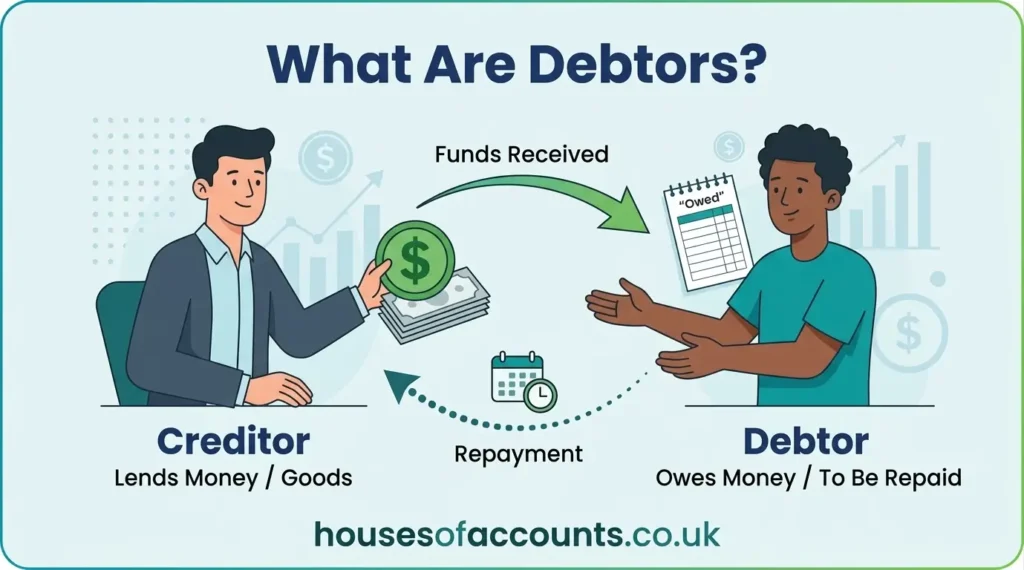
A debtor is any individual, business, or organisation that owes your company money. In most small businesses, this happens when you sell goods or provide a service on credit — meaning the customer receives what they’ve paid for before actually paying for it, usually under agreed terms like 30 or 60 days.
Until that invoice is settled, the amount owed sits on your balance sheet as a debtor, or what accountants more formally call “trade receivables” or “accounts receivable”. It’s recorded as a current asset because, in theory, it represents cash you’re due to receive within the next year.
A Simple Example
Imagine a Birmingham-based IT support company installs new hardware for a local law firm and issues an invoice for £4,500, due within 30 days. From the moment that invoice is raised until the law firm pays it, the law firm is a trade debtor on the IT company’s books. The £4,500 counts as an asset even though no cash has actually landed in the bank yet.
Debtors vs Creditors
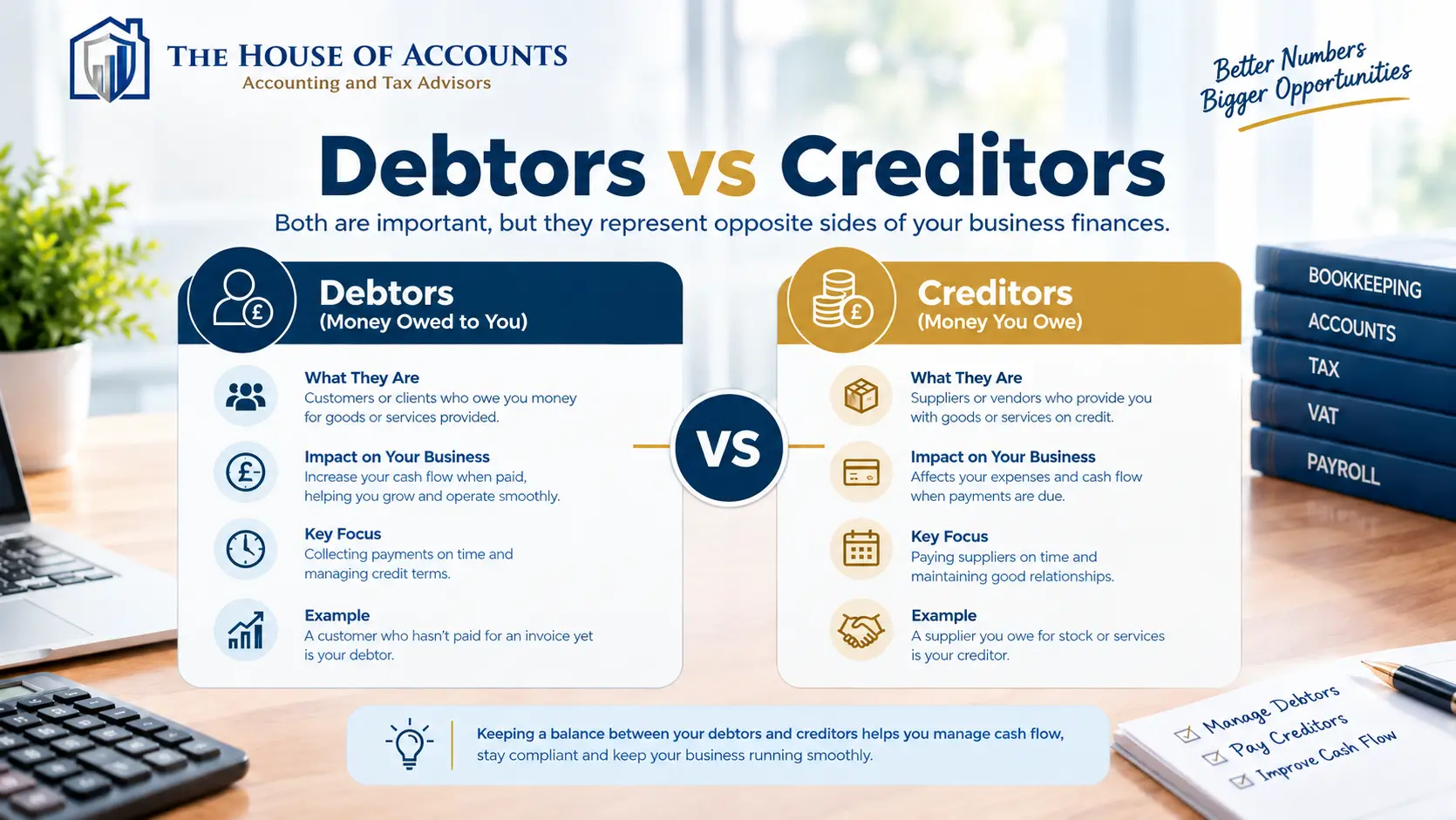
It’s easy to mix these two up, so here’s the distinction: a debtor owes your business money, while a creditor is someone your business owes money to — such as a supplier or a lender. Debtors sit on the asset side of your balance sheet; creditors sit on the liabilities side. Managing both well is essential for healthy cash flow.
Why Tracking Debtors Matters
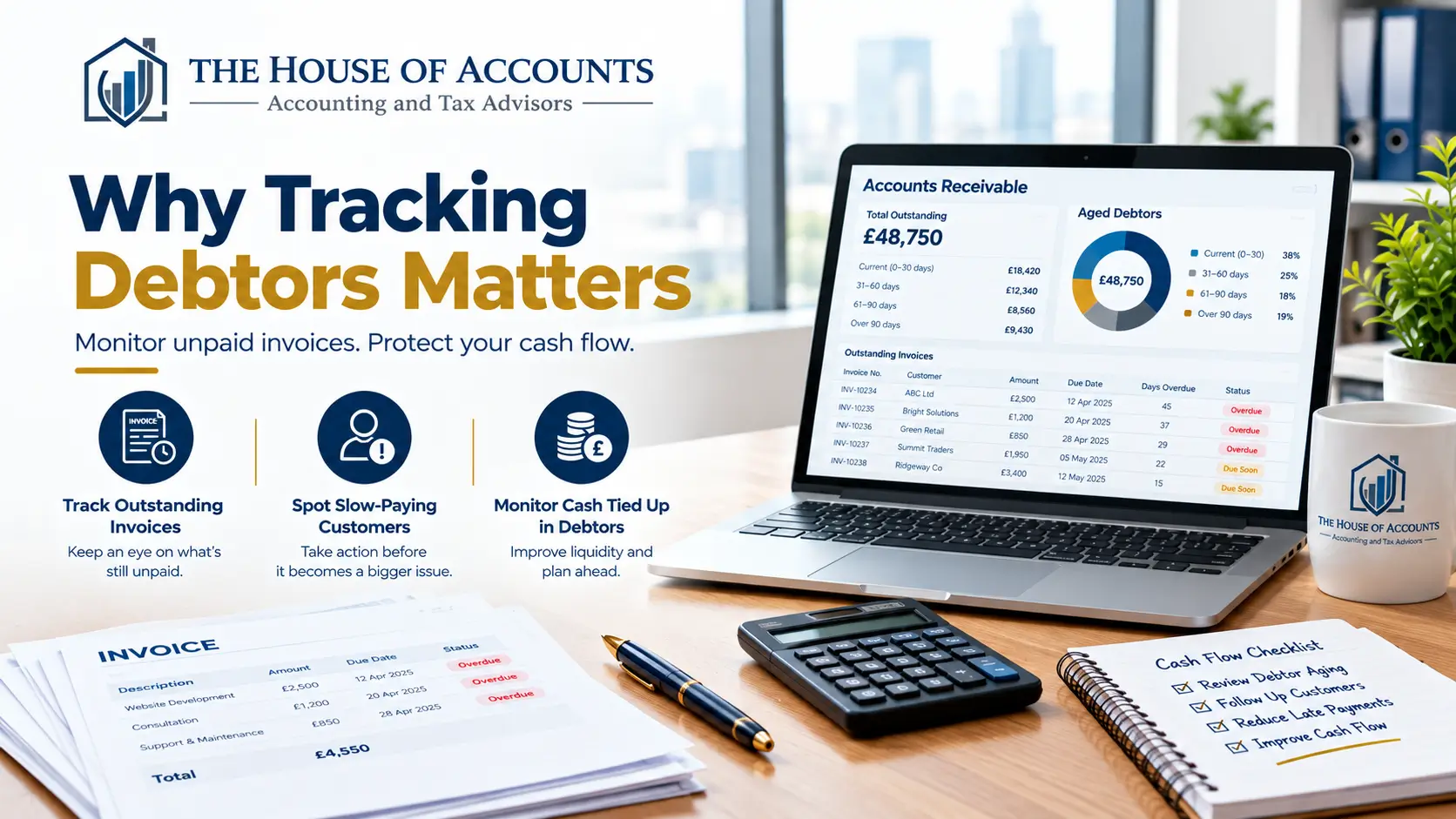
- It shows you exactly how much cash is tied up in unpaid invoices at any given time.
- It helps you spot slow-paying customers before they become a serious cash flow problem.
- It’s essential for accurate management accounts and for lenders assessing your business.
- Left unmanaged, rising debtor balances are one of the clearest early warning signs of cash flow trouble — even when your sales figures look healthy.
Debtor Days: A Key Metric to Watch
Debtor days (also called days sales outstanding) tells you, on average, how long it takes customers to pay you. The formula is:
- Debtor Days = (Trade Receivables ÷ Annual Turnover) × 365
For example, if you have £20,000 outstanding in unpaid invoices and £200,000 in annual sales, your debtor days would be 36.5 — meaning it takes your customers just over a month, on average, to pay you. A rising debtor days figure over time is a signal that customers are taking longer to settle up, which can strain your cash flow even if revenue keeps growing.
What Happens When a Debtor Doesn't Pay?
Sometimes an invoice simply won’t be collected. Once you’ve genuinely exhausted efforts to recover it, it can be formally written off as a bad debt and claimed as a business expense, reducing your Corporation Tax or Self Assessment bill for that period. If the invoice was VAT-registered and remains unpaid for more than six months, you may also be able to reclaim the VAT through HMRC’s bad debt relief scheme.
Practical Tips for Managing Debtors
- Send invoices immediately after delivering goods or completing work — delays in invoicing lead to delays in payment.
- Set clear, written payment terms upfront and put them on every invoice.
- Use automated reminders for invoices approaching or past their due date.
- Run an aged debtors report regularly to catch slow payers early.
- Consider requesting deposits or staged payments for larger projects.
Let Us Manage Your Debtors For You
Keeping on top of who owes you money shouldn’t be a full-time job on top of running your business. As part of our bookkeeping and accounting services, House Of Accounts tracks your debtors, chases overdue invoices, and keeps your cash flow healthy — with a dedicated ACCA Qualified accountant looking after your books.
Frequently Asked Questions
A debtor is a customer or other party that owes your business money, usually because they've received goods or services on credit and haven't yet paid the invoice.
Debtors are recorded as a current asset on the balance sheet, because they represent cash the business expects to receive in the near future.
A debtor owes your business money, while a creditor is someone your business owes money to, such as a supplier or lender. They sit on opposite sides of the balance sheet.
Debtor days measure how long, on average, it takes customers to pay you. A rising figure signals slower payments and potential cash flow pressure, even if sales remain strong.
Yes. Once genuinely unrecoverable, the amount can be written off as a bad debt and claimed as a business expense, and VAT-registered businesses may be able to reclaim VAT on invoices unpaid for over six months.
Invoice promptly, set clear payment terms, send automated reminders, and review your aged debtors report regularly to catch late payers before they become a bigger problem.
Yes. Our accountants can set up debtor tracking, chase overdue invoices, and build this into your regular bookkeeping so unpaid invoices never slip through the cracks.
Ready to Start?
Don’t let confusing numbers or missed deadlines hold your business back. Get matched with a dedicated ACCA Qualified accountant at House Of Accounts and get clear, upfront pricing from day one.
Get in touch with our team today and let us take the accounting stress off your plate.
Contact Us to Book Your Free Consultation
📞 Call: +44 20 3386 1902
💬 WhatsApp: +44 7539 945628
✉️ Email: Info@housesofaccounts.co.uk
📍 Address: 9 Powick Road, Birmingham, B23 7NY, UK