ACCA Qualified Accountants
9 Powick Road, Birmingham B23 7NY
Invoice Number Meaning & Format (UK) | House Of Accounts
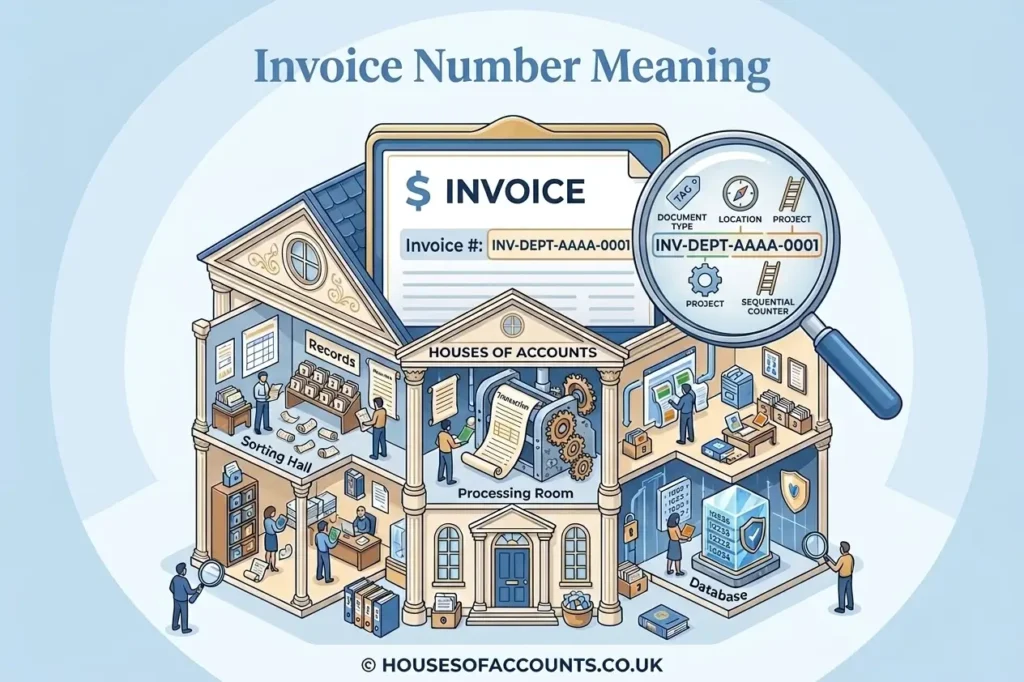
Every invoice your business sends should carry one small but legally important detail: a unique invoice number. It looks like a minor formality, but getting it wrong can cause real problems with HMRC, your bookkeeping, and even your cash flow. Here’s everything you need to know, explained by House Of Accounts.
What Is an Invoice Number?
An invoice number is a unique identifier assigned to every invoice a business issues. Its job is simple but essential: it lets you, your customer, your accountant, and HMRC track a specific transaction without any confusion, even if two invoices happen to be for identical amounts.
In the UK, if your business is VAT-registered, HMRC requires that invoice numbers be unique and sequential — meaning no two invoices share the same number, and you don’t skip or reuse numbers without a documented reason. Even if you’re not VAT-registered, using a structured numbering system is strongly recommended for clean record-keeping.
Why Invoice Numbers Matter
- They prevent duplicate billing and make it obvious if a customer has been charged twice.
- They make it far easier to locate a specific transaction during bookkeeping or a VAT inspection.
- They help you and your customers track the status of individual invoices — issued, paid, or overdue.
- A missing or duplicated invoice number can raise questions during an HMRC review, so getting this right from day one avoids unnecessary hassle later.
Common Invoice Numbering Formats
There’s no single legally mandated format in the UK — HMRC simply requires that the sequence is unique and doesn’t repeat or skip without explanation. That said, most UK businesses use one of the following approaches:
Simple Sequential
The most common approach for freelancers and small businesses: INV-0001, INV-0002, INV-0003, and so on. It’s easy to manage and perfectly compliant, especially if you issue fewer than 50 or so invoices a year.
Year-Based
Adding the year as a prefix, such as 2026-001, 2026-002, resetting each January. This makes it instantly clear which financial year an invoice belongs to.
Year-Month-Based
A more detailed version for businesses issuing a high volume of invoices: 2026-09-001, 2026-09-002 for September, then resetting for October. This is particularly useful once your invoice volume grows large enough that a simple sequence becomes harder to scan quickly.
Client or Project-Based
Some businesses add a client code before the sequence, such as ACME-001, ACME-002, to make it easy to filter invoices by customer. This works well alongside sequential numbering as long as the overall sequence stays consistent and traceable.
How to Create an Invoice Number Correctly
- Pick one format and stick to it consistently across every invoice you issue.
- Never reuse a number, even if an invoice was cancelled or voided — instead, record the cancellation and keep the number retired.
- Keep credit notes on their own separate sequence (for example, CN-001, CN-002) rather than mixing them into your invoice numbering.
- If you use invoicing software like Xero, QuickBooks, or FreeAgent, let it auto-generate the number for you — this virtually eliminates the risk of duplicates or gaps.
- Keep a clear record of why any gap in your sequence exists, in case HMRC ever asks during a VAT inspection.
What Else Needs to Be on a Compliant UK Invoice?
Alongside your invoice number, HMRC expects every invoice to include your business name and address, the invoice date, a description of the goods or services provided, the amount charged, and — if you’re VAT-registered — your VAT registration number and the VAT charged. Getting these basics right from the start avoids awkward corrections later and keeps your bookkeeping clean.
Get Your Invoicing Set Up Properly
If your invoicing system feels disorganised, or you’re not sure whether your numbering is fully HMRC-compliant, our team can help. As part of our bookkeeping and VAT services, House Of Accounts sets up clean, compliant invoicing systems for UK businesses — so every invoice you send is correct the first time.
Frequently Asked Questions
An invoice number uniquely identifies each invoice you issue, making it easy to track payments, avoid duplicate billing, and keep clean financial records for HMRC purposes.
Yes, if your business is VAT-registered, HMRC requires a unique, sequential invoice number on every VAT invoice. Non-VAT-registered businesses aren't legally required to include one, but it's strongly recommended.
You should avoid gaps where possible. If a number is skipped due to a cancelled invoice, keep a record explaining why, since unexplained gaps can raise questions during a VAT inspection.
HMRC doesn't mandate a specific format, only that numbers are unique and sequential. Common formats include simple sequential (INV-0001), year-based (2026-001), or year-month-based (2026-09-001).
No. Credit notes should follow their own separate sequential series, such as CN-001, CN-002, rather than being mixed into your regular invoice numbering.
Yes. Most invoicing software, including Xero, QuickBooks, and FreeAgent, automatically generates sequential invoice numbers, which significantly reduces the risk of duplicates or gaps.
Yes. Our accountants can help you set up a fully HMRC-compliant invoicing and numbering system as part of our bookkeeping services, so your records stay clean and audit-ready.
Ready to Start?
Don’t let confusing numbers or missed deadlines hold your business back. Get matched with a dedicated ACCA Qualified accountant at House Of Accounts and get clear, upfront pricing from day one.
Get in touch with our team today and let us take the accounting stress off your plate.
Contact Us to Book Your Free Consultation
📞 Call: +44 20 3386 1902
💬 WhatsApp: +44 7539 945628
✉️ Email: Info@housesofaccounts.co.uk
📍 Address: 9 Powick Road, Birmingham, B23 7NY, UK