ACCA Qualified Accountants
9 Powick Road, Birmingham B23 7NY
EBay Accountant Services for UK Sellers
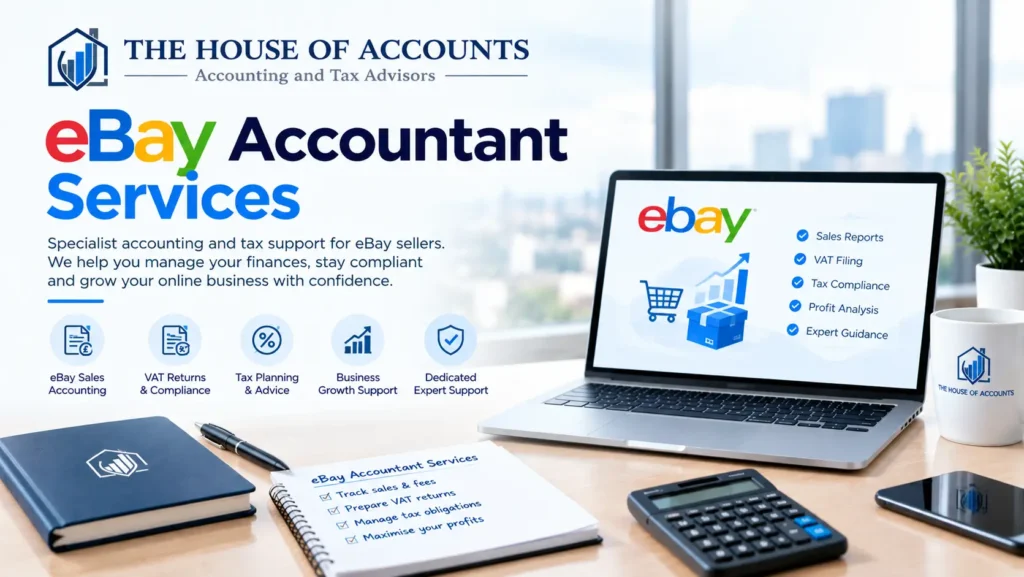
Selling on eBay has real tax implications once it moves beyond an occasional clear-out. An House Of Accounts eBay accountant helps UK sellers stay compliant while making the most of allowable expenses.
Does Selling on eBay Count as Taxable Income?
It depends on intent and pattern. Occasional, one-off sales of personal items you already own — clearing out a wardrobe or garage — generally aren’t taxable. But if you’re buying stock to resell, sourcing items regularly, or pricing for profit, HMRC considers this trading, and the income becomes taxable above the £1,000 trading allowance.
HMRC Now Receives Your eBay Data Automatically
Since January 2024, digital platforms including eBay have been legally required to collect and report seller income data directly to HMRC, with reports covering thresholds around 30+ items sold or roughly £1,735 in sales per year. This means HMRC can cross-reference platform data against your Self Assessment return, so accurate self-reporting matters more than ever.
When Do You Need to Register With HMRC?
- If your trading profit exceeds £1,000 in a tax year, you must register for Self Assessment by 5 October following that tax year.
- If your eBay turnover approaches the VAT threshold (£90,000), you’ll also need to consider VAT registration.
- If you’re unsure whether your selling counts as trading, an accountant can assess your specific pattern of activity.
Allowable Expenses for eBay Sellers
- Cost of stock or materials purchased for resale.
- eBay and PayPal seller fees.
- Postage, packaging, and courier costs.
- A proportion of home office or storage costs, if applicable.
- Mileage or travel costs for sourcing stock.
Bookkeeping Tips for eBay Sellers
- Download transaction and payout reports regularly rather than reconstructing records at year-end.
- Keep eBay’s fee and payout reporting separate from your actual profit calculation — they’re not the same figure.
- Use the £1,000 trading allowance as a flat deduction if your actual expenses are lower than that amount.
eBay Managed Payments and Your Tax Records
Since eBay moved sellers onto its own Managed Payments system, all sales proceeds, fees, and refunds flow through eBay directly rather than via PayPal, which actually makes record-keeping considerably easier — a single monthly payout report shows gross sales, fees deducted, and the net amount paid to your bank account, giving a cleaner audit trail than the mixed PayPal and bank records sellers previously had to reconcile.
- Managed Payments consolidates sales, fees, and payouts into one reportable system.
- Monthly payout reports are the easiest single source for reconciling your eBay income.
- Keep payout reports alongside your other bookkeeping records for at least five years.
It’s also worth separating personal and business selling activity on eBay if you do both from the same account, since mixing genuine personal clear-outs with a resale business on one seller profile makes it much harder to demonstrate to HMRC, if ever asked, exactly which sales were taxable trading and which were simply offloading items you’d owned personally — a distinction that matters considerably if your account is ever reviewed.
As your eBay business grows, it’s also worth revisiting whether your current legal structure still suits you. Many sellers start as an unregistered sole trader below the trading allowance, move to registered sole trader status once profits grow, and eventually consider a limited company once turnover and profit reach a level where the tax efficiency of incorporation outweighs the extra administrative burden involved.
Many successful eBay sellers eventually expand onto other marketplaces — Amazon, Etsy, or their own website — and each additional platform brings its own fee structure, payout schedule, and reporting quirks to reconcile. Setting up a consistent bookkeeping approach early, one that can absorb additional sales channels without a complete rebuild, saves considerable time and confusion as a seller’s business grows beyond a single platform.
Get Specialist eBay Accounting Support
From determining whether you need to register to filing accurate Self Assessment returns, our bookkeeping and tax services support eBay sellers with the specific reporting and expense rules that apply to online selling.
Frequently Asked Questions
Only if your selling activity counts as trading — buying stock to resell or sourcing regularly for profit — and your total trading income exceeds the £1,000 trading allowance.
Yes. Since January 2024, eBay and other digital platforms are legally required to report seller income data to HMRC annually.
Occasional personal sales of items you already own and aren't reselling for profit generally aren't considered taxable trading.
Once your trading profit from eBay (and any other side income combined) exceeds £1,000 in a tax year, you must register for Self Assessment.
Yes. eBay and payment processing fees are allowable business expenses that reduce your taxable trading profit.
Only once your taxable turnover exceeds £90,000 in a rolling 12-month period, the same threshold that applies to any UK business.
Yes. We help eBay sellers determine their tax position, register correctly with HMRC, and file accurate returns with all allowable expenses claimed.
Ready to Start?
Don’t let confusing numbers or missed deadlines hold your business back. Get matched with a dedicated ACCA Qualified accountant at House Of Accounts and get clear, upfront pricing from day one.
Get in touch with our team today and let us take the accounting stress off your plate.
Contact Us to Book Your Free Consultation
📞 Call: +44 20 3386 1902
💬 WhatsApp: +44 7539 945628
✉️ Email: Info@housesofaccounts.co.uk
📍 Address: 9 Powick Road, Birmingham, B23 7NY, UK