To file a Corporation Tax return online in 2026, you must use commercial software or an agent such as an accountant. HMRC's free online filing service closed on 31 March 2026. The return is due 12 months after the end of the accounting period it covers. The tax itself is usually due earlier: 9 months and one day after the period ends.
If you want to know how to file a corporation tax return, the short answer has changed. Since 1 April 2026, "online" means filing through commercial software or through an agent, because HMRC's own free filing service has closed.
This guide is for directors of small UK limited companies. It covers what the CT600 is, what changed in April 2026, how the filing and payment deadlines fit together, and what filing looks like step by step. If you would rather hand the job over, our team at House Of Accounts prepares and files Company Tax Returns for limited companies.
What is a CT600?
A CT600 is HMRC's Company Tax Return form. Your company must file a Company Tax Return if HMRC sends it a "notice to deliver a Company Tax Return". You must still file if the company made a loss or has no Corporation Tax to pay.
The return is more than one form. HMRC says the software you use should let you file three things together:
| Part of the return | What it is | Who usually prepares it |
|---|---|---|
| CT600 form | The return itself: your company details, taxable profit or loss and the Corporation Tax due | You or your accountant, in filing software |
| Corporation Tax computation | The working that turns your accounts profit into taxable profit | You or your accountant |
| Company accounts | Your annual accounts for the period the return covers | You or your accountant |
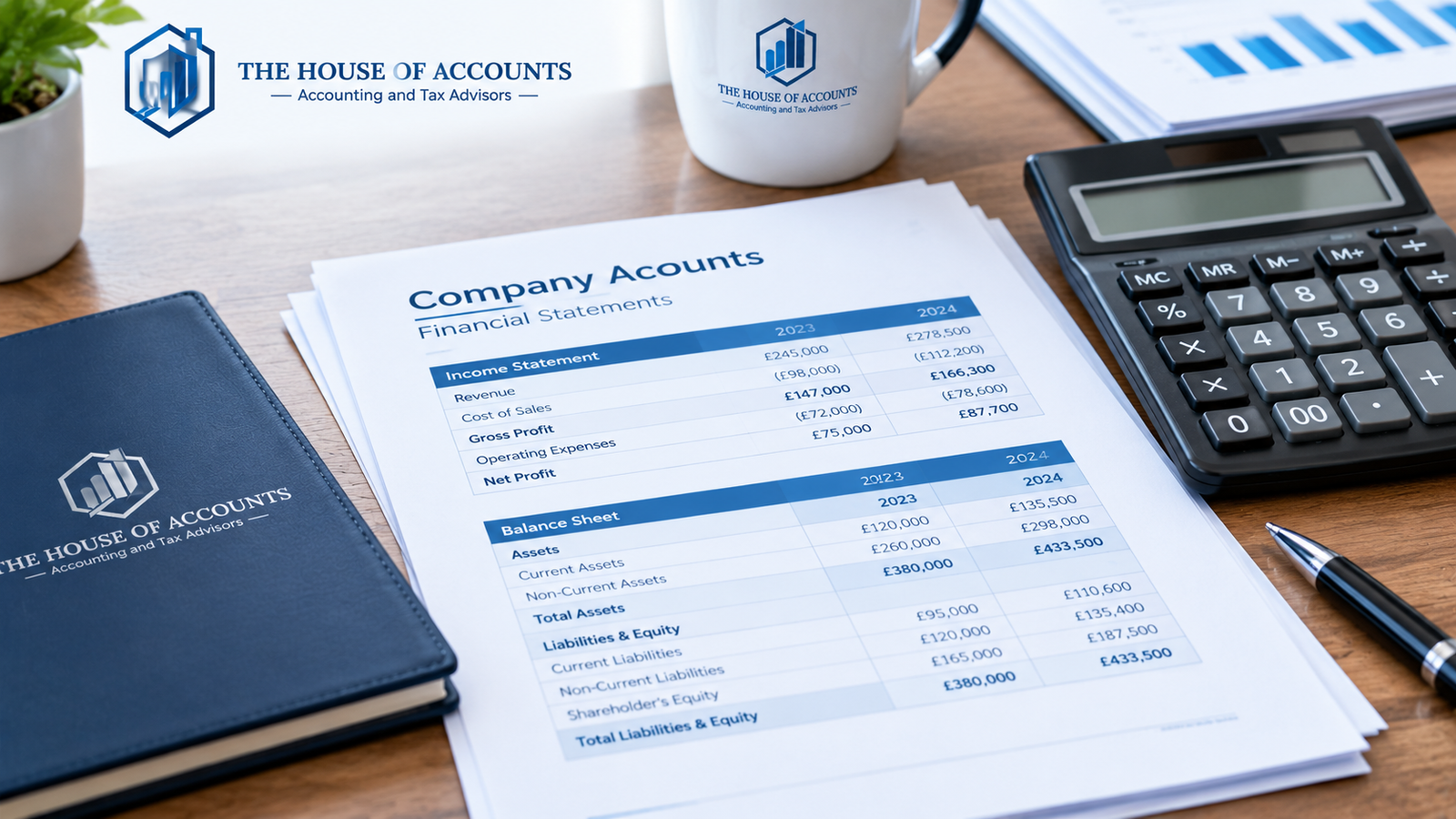
The computation matters because your profit or loss for Corporation Tax is different from the profit or loss shown in your annual accounts. Some costs in the accounts are not deductible for tax, and some tax adjustments do not appear in the accounts at all.
Sole traders and partnerships do not file a CT600. They file a Self Assessment return instead.
What changed in April 2026?
HMRC's "File your accounts and Company Tax Return" online service closed on 31 March 2026. From 1 April 2026, HMRC says you should use commercial software to file annual accounts and Company Tax Returns with HMRC.
That leaves small companies with three routes:
- Commercial software. You buy or subscribe to a product from HMRC's list of commercial software suppliers and file the return yourself.
- An agent. An accountant or tax adviser prepares the return and files it through their own software.
- A paper return. This is only allowed if you have a reasonable excuse for not filing online, or you are filing in Welsh.
The closure also affects Companies House. You still need to file annual accounts with Companies House, either online through a software provider or on paper by post. Filing with HMRC does not file your accounts at Companies House, and filing at Companies House does not file your tax return.
If you are weighing up products, our guide to accounting software for companies explains what to look for. Check that any product you choose can file the CT600, the computation and the accounts, not just one of them.
Deadlines: filing vs paying
There are two separate deadlines, and the payment deadline usually comes first. The return is due 12 months after the end of the accounting period it covers. Corporation Tax is usually due 9 months and one day after the end of the period.
Worked example: year ending 31 March 2026
| What | Date | Day |
|---|---|---|
| Accounting period ends | 31 March 2026 | Tuesday |
| Corporation Tax usually due (9 months and one day) | 1 January 2027 | Friday |
| Company Tax Return due (12 months) | 31 March 2027 | Wednesday |
| First late filing penalty if not filed | 1 April 2027 | Thursday |
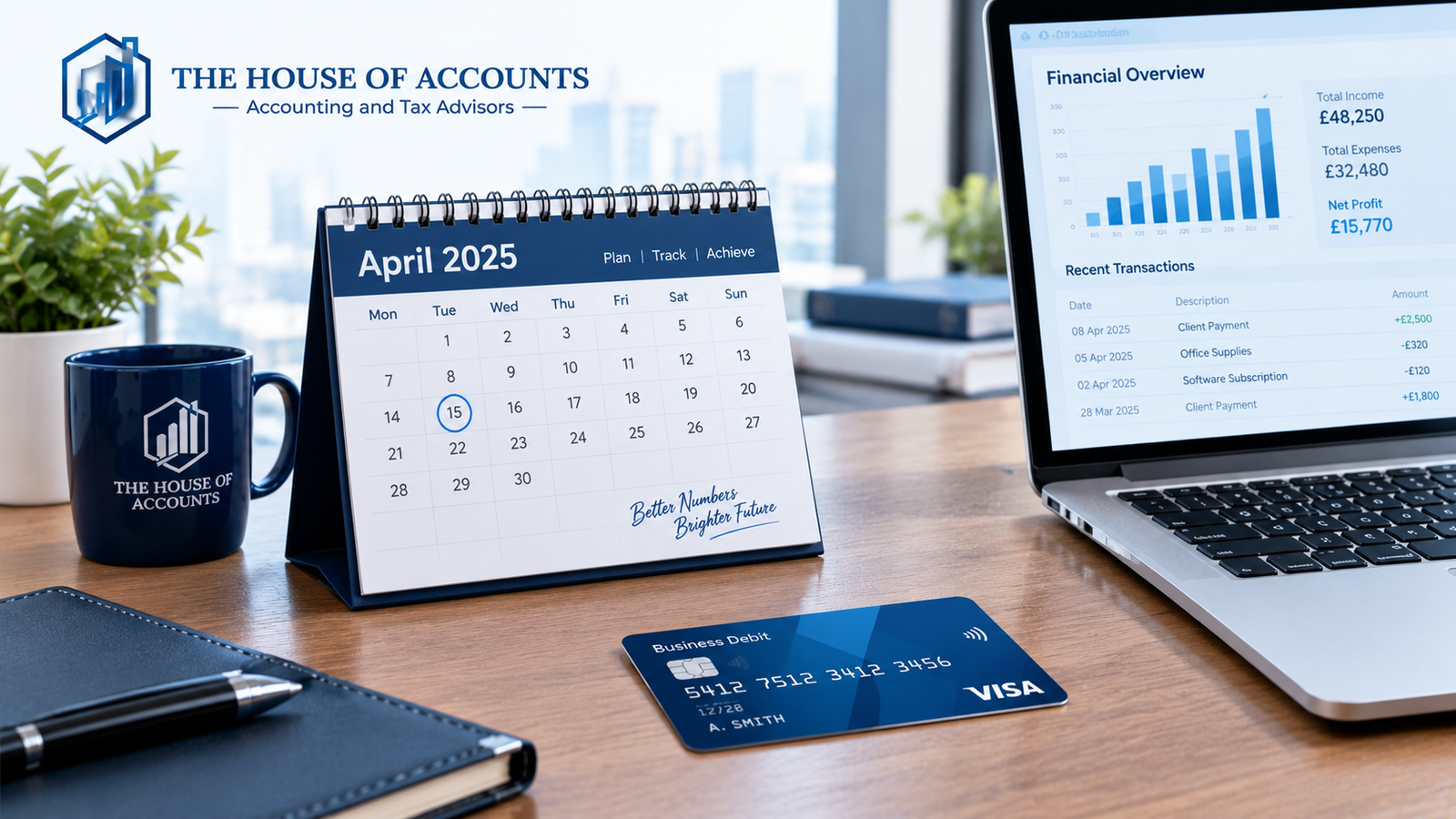
In this example you have nine months to get the tax paid, but a further three months before the return itself is due. In practice it is easier to finish the accounts and the return before the payment date, so you know the exact amount to pay.
Missing the filing deadline costs money. HMRC charges £200 if the return is one day late and another £200 at three months; at six months HMRC estimates your bill and adds 10% of the unpaid tax, with a further 10% at 12 months.
How to file a Corporation Tax return, step by step
Here is what filing looks like now that the free HMRC service has gone. The order below is the one we follow for small limited companies.
- Check the notice and the period. Find the notice to deliver a Company Tax Return and check the accounting period dates it covers. Keep your company's Unique Taxpayer Reference (UTR) to hand.
- Finish the annual accounts. Close the books for the period: bank reconciled, sales and costs complete, and year-end adjustments made.
- Prepare the Corporation Tax computation. Adjust the accounts profit to get the profit or loss for Corporation Tax. This is where non-deductible costs are added back and tax adjustments are made.
- Choose your filing route. Either set up commercial software from HMRC's supplier list, or appoint an accountant to file for you.
- Complete the CT600. Enter or import the company details, the period, the taxable profit or loss and the tax due. Attach the computation and the accounts in the software.
- Review before you submit. A director should check the figures against the accounts, confirm the period dates and make sure the tax due matches what has been or will be paid.
- Submit and keep a record. Send the return through the software or your agent. Save the submission confirmation and a copy of everything filed. Then file the accounts at Companies House separately and pay the tax by the payment deadline.

Accounting period dates match the notice to deliver.
Company UTR and company details are correct.
Accounts are final, not a draft version.
The computation starts from the same profit figure as the accounts.
The tax figure on the CT600 matches what you plan to pay.
A separate plan is in place to file the accounts at Companies House.
Accounts and computations: what the software has to send
With the old HMRC service gone, the software has to carry the whole package. HMRC says the software you choose should let you file the CT600, a Corporation Tax computation and your company accounts. Check before you pay, and test the software well before the deadline.
Common mistakes to avoid
Most problems with a Company Tax Return come from timing and assumptions, not from the form itself. Watch for these:
- Treating the filing deadline as the payment deadline. Tax is usually due 9 months and one day after the period ends, three months before the return.
- Skipping the return because the company made a loss. You must still file if you make a loss or have no Corporation Tax to pay.
- Using the accounts profit as the taxable profit. The two figures are different. The computation is what links them.
- Assuming HMRC filing covers Companies House. Accounts must still be filed with Companies House as a separate step.
- Planning to post a paper return. Paper is only allowed with a reasonable excuse or for filing in Welsh.
- Leaving the software decision too late. Setting up new software, importing data and checking the output all take time.
Filing yourself or using an accountant?
HMRC lets you prepare and file the return yourself or use an accountant. Both routes are valid. The right one depends on your time, your confidence with tax adjustments and how simple the company is.
| Filing yourself | Using an accountant | |
|---|---|---|
| What you need | Commercial software, final accounts and a computation | Your records and answers to their questions |
| Best suited to | Simple companies with a director confident in tax adjustments | Directors who want the accounts, computation and CT600 handled together |
| Main risk | Errors in the computation or a product that cannot file every part | Missing deadlines if records arrive late |
| Your role | Prepare, check and submit everything | Supply records, then review and approve the return |
Our Corporation Tax service covers the accounts, the computation and the CT600 for small limited companies. Fees are quoted after a short scope call, with all costs listed upfront.
There are limits. If your company is large, part of a group, or claiming research and development relief, the rules go beyond this guide and you should take specialist advice before filing. For HMRC's own overview, see GOV.UK: Company Tax Returns.
Frequently asked questions
Do I need to file if my company made a loss?
Yes. If HMRC has sent your company a notice to deliver a Company Tax Return, you must file it even if the company made a loss or has no Corporation Tax to pay. The return is still due 12 months after the end of the accounting period, and late filing penalties still apply.
Can I pay Corporation Tax before filing the return?
Yes, and usually you need to. Corporation Tax is normally due 9 months and one day after the end of the accounting period, while the return is not due until 12 months after it. Most companies therefore pay before they file, so it helps to finish the computation early.
Can I still file a paper CT600?
Only in limited cases. HMRC accepts a paper Company Tax Return if you have a reasonable excuse for not filing online, or if you are filing in Welsh. Otherwise, since the free HMRC service closed on 31 March 2026, you need commercial software or an agent to file.
Can I amend a Company Tax Return after filing?
Yes. You must usually make amendments within 12 months of the filing deadline, using commercial software or a paper return sent to the Corporation Tax office. After that, you may be able to claim overpayment relief if you overpaid, or should tell HMRC about any underpaid tax.
Do I still need to file accounts at Companies House?
Yes. Filing your Company Tax Return with HMRC does not file your accounts at Companies House. You still need to file annual accounts there separately, either online through a software provider or on paper by post. Treat the two filings as separate tasks with separate deadlines.
Not sure what is due and when?
Send us your company's year-end date and we will confirm which returns and payments are due, and by when. talk to our team to get started.
This article was researched and drafted with AI assistance, then fact-checked against GOV.UK and HMRC guidance and edited by the House Of Accounts team.